
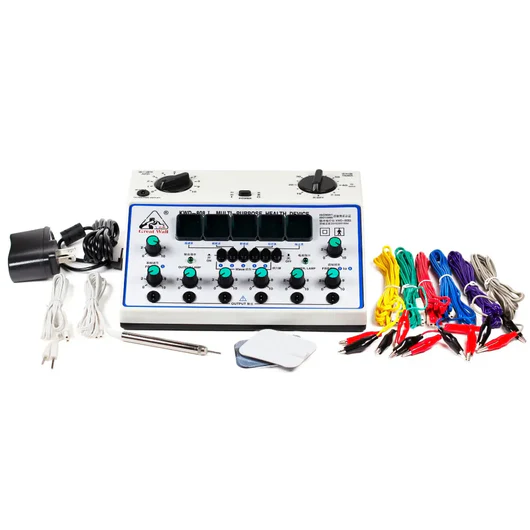
Electrical Stimulation Device – 6 channels
Electrical Stimulation Device: (aka
E-stim Device):
An electro-acupuncture device is a small, medical-grade electrical stimulation unit used during acupuncture treatments.
The device connects to acupuncture needles using thin wires with small clips. Once connected, it delivers a controlled, low-level electrical current between selected needles.
The practitioner adjusts the settings on the device to control:
- Pulse speed (frequency)
- Strength of stimulation (intensity)
- Length of treatment
The electrical current stays localized between the connected needles, allowing stimulation to be directed to specific muscles, nerves, or tissues.
Unlike TENS machines and similar devices that use adhesive pads on the skin, electro-acupuncture delivers stimulation directly through the acupuncture needles.
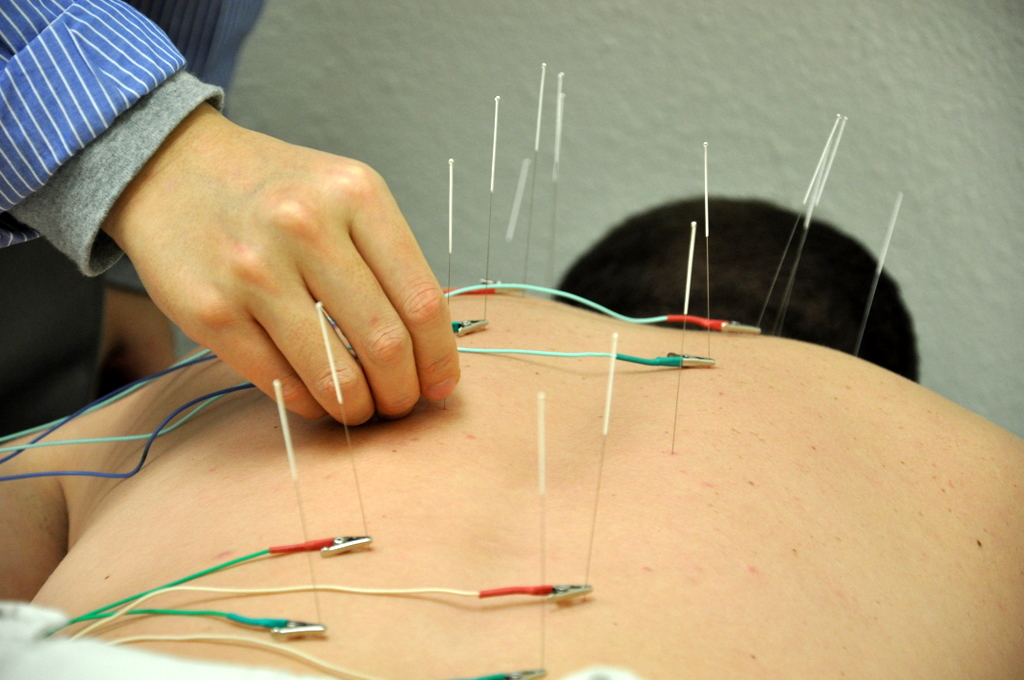
Electro-Needling aka Electro-Acupuncture
Electro-acupuncture is an acupuncture technique in which a gentle electrical current is applied to acupuncture needles to create consistent, targeted stimulation.
By delivering a steady signal through the needles, electro-acupuncture can influence muscles, nerves, and connective tissue more directly than manual needle stimulation alone.
It is commonly used to:
- Stimulate tissue repair and regeneration
- Release tight or dysfunctional muscle tissue, including trigger points
- Activate motor points to improve muscle firing and coordination
- Reduce pain and inflammation
- Improve local blood flow and nerve signaling
Electro-acupuncture is especially useful for orthopedic injuries, chronic pain, nerve irritation, and conditions involving muscle inhibition or persistent tension.
Assessment & Diagnosis
Orthopedic Assessment:
An orthopedic assessment is a focused physical evaluation used to identify the source of pain or dysfunction. It may include movement testing, strength testing, and palpation to determine which tissues are involved and why symptoms are occurring.
Muscle Inhibition:
Muscle inhibition occurs when a muscle is unable to activate fully, often due to pain, injury, or nerve interference. Even strong muscles can become inhibited, leading to weakness, compensation, and ongoing pain.
Compensation Patterns:
Compensation patterns develop when the body alters movement to avoid pain or weakness. While helpful short-term, these patterns often create strain in other areas and contribute to recurring or spreading pain.
Nerve Irritation vs. Nerve Damage:
Nerve irritation refers to altered or sensitized nerve signaling that causes pain, tingling, or weakness but is often reversible. Nerve damage involves structural injury to the nerve and may require longer recovery or additional medical care.
Referred Pain:
Referred pain is pain felt in a different location than its actual source. For example, hip dysfunction may cause knee pain, or shoulder issues may cause arm or neck symptoms.
Root Cause vs. Symptom Treatment:
Symptom treatment focuses on reducing pain where it is felt. Root cause treatment addresses the underlying dysfunction creating the pain, helping prevent recurrence.
Pain & Tissue Concepts
Acute vs. Chronic Pain:
Acute pain is short-term and typically related to recent injury or inflammation. Chronic pain persists beyond normal healing time and often involves changes in muscle function, nervous system signaling, or movement patterns.
Inflammation:
Inflammation is the body’s natural response to injury or irritation. While necessary for healing, persistent or poorly regulated inflammation can contribute to ongoing pain and tissue sensitivity.
Scar Tissue & Adhesions:
Scar tissue and adhesions form as part of healing but can restrict movement and alter tissue glide. When excessive or poorly organized, they may contribute to stiffness, weakness, or pain.
Muscle Guarding:
Muscle guarding is an involuntary tightening of muscles in response to pain or perceived threat. While protective at first, prolonged guarding can limit movement and delay recovery.
Central Sensitization:
Central sensitization occurs when the nervous system becomes overly responsive, amplifying pain signals even after tissues have healed. This can make pain feel disproportionate or persistent.
Why Pain Persists After Injury:
Pain may persist due to incomplete tissue healing, altered movement patterns, muscle inhibition, nervous system sensitization, or unresolved compensation—even when imaging appears normal.
Safety & Sensations
Does Acupuncture Hurt?
Acupuncture sensations vary. Some needles are barely noticeable, while others may feel sharp at first and then quickly fade as the tissue relaxes.
Occasionally, a needle may feel sharp followed by stinging or burning. This is not expected and should be communicated immediately. In these cases, the needle is removed right away, and the sensation typically resolves in a minute or two.
Clear communication during treatment helps ensure safety and comfort.
Needle Sensations:
Common sensations during treatment include dull aching, tingling, muscle twitching, or a spreading feeling. These responses are normal and often indicate tissue or nerve activation.
Electrical Sensation During Treatment:
During electro-acupuncture, patients typically feel a rhythmic pulsing or tapping sensation. The intensity is adjusted to comfort and should never feel painful.
Electro-acupuncture precautions and contraindications
- Electro-acupuncture is not used for patients with implanted electronic devices (such as a pacemaker or implanted stimulator).
- For orthopedic metal implants such as Titanium / stainless steel / cobalt-chrome orthopedic hardware (plates, screws, joint replacements), electro-acupuncture is generally considered safe, but we may modify technique and avoid certain placements depending on implant location, type, surgical timing, and sensitivity.
- Contraindicated Metals: nickel-containing alloys
- If you have an implant and are unsure what type it is, bring your implant card or surgical summary so we can make an informed decision.